

Updated on October 1, 2026
Google Voice costs 10 USD per user each month as an entry add-on, whereas Vonage operates as an independent business PBX starting between 13.99 and 19.99 USD per line monthly. The core architectural split is straightforward: Voice functions purely as an administrative module inside Google Workspace, while Vonage provides a standalone unified communications platform with dedicated hardware support and native call management.
Selecting between these systems comes down to whether your organization already runs entirely on Google apps or requires a dedicated telephony infrastructure with standalone desk phones and complex call distribution.
How do Google Voice and Vonage pricing plans compare for businesses?
Telephony software bills depend heavily on whether a platform requires underlying productivity subscriptions. Evaluating the entry rate on a marketing page rarely reveals your true monthly invoice once seat minimums, required base licenses, and feature tiers factor into the calculation.
Official Google Workspace administration documentation lists three commercial Voice tiers:
| Plan | Monthly Price | User Limit | Key Features |
|---|---|---|---|
| Starter | 10 USD / user | Up to 10 users | Call forwarding, voicemail transcription, basic support |
| Standard | 20 USD / user (16 USD promo) | Unlimited | Multi-level auto attendant, ring groups, desk phone support |
| Premier | 30 USD / user (24 USD promo) | Unlimited | Automatic call recording, BigQuery advanced reporting, Vault |
What is the real monthly cost of Google Voice with Workspace?
Google Voice cannot be purchased as an isolated phone service. The Starter tier costs 10 USD per user each month with a hard cap of 10 users. Organizations exceeding 10 seats must upgrade to the Standard tier at 20 USD monthly per seat (or 16 USD under promotional rates), while the Premier tier reaches 30 USD monthly per seat (discounted to 24 USD on promotion).
Because each telephony seat requires a companion Google Workspace account, the actual cash outlay equals the Voice add-on plus your Workspace base fee. For companies already running their email and cloud storage through Google, this architecture keeps user provisioning in one console. For teams using Microsoft 365 or independent mail servers, paying for Workspace solely to unlock telephony creates unnecessary software overhead.
How are Vonage tiers structured for small and mid-sized teams?
Vonage divides its telephony service into Mobile, Premium, and Advanced plans. Published vendor pricing places the entry Mobile tier between 13.99 and 19.99 USD per line monthly. The Premium package ranges from 20.99 to 29.99 USD per line monthly, while the Advanced package spans 27.99 to 39.99 USD per line monthly, with exact rates scaling by total team size.
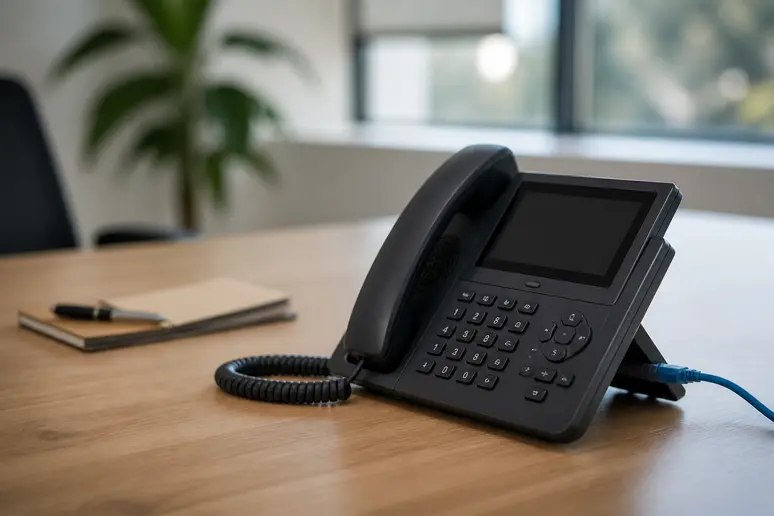
Vonage operates completely independently of third-party office suites. The base Mobile tier covers softphones on desktop computers and mobile devices. Physical IP desk phones and multi-level call menus unlock starting at the Premium tier, allowing businesses to run traditional office telephony without bundling unused email or file-sharing licenses.
What are the hidden costs and limitations of Google Voice as a Workspace add-on?
Administrative dependencies inside Google Admin Console introduce operational constraints that standard PBX buyers often overlook. Telephony management stays tied to IT account provisioning, creating friction whenever frontline or seasonal workers need phone numbers without full cloud storage seats.
Why is an active Google Workspace subscription mandatory?
Google Voice provisions lines strictly to active domain users. You cannot assign a business phone number to an unmanaged mailbox or a shared external address. If a company employs field technicians, warehouse crew, or part-time staff who only need voice calling, management must still purchase a full Workspace seat for every assigned line.
Suspending or deleting an employee Workspace account immediately cuts off their associated phone line, call history, and voicemail records. This tight coupling prevents hybrid deployments where deskless staff receive lightweight calling tools without recurring productivity seat costs.
Does Google Voice support MMS and advanced business texting?
Google Voice handles standard one-to-one SMS messaging across the United States and Canada, but it lacks enterprise messaging infrastructure. Automated SMS workflows, shared departmental inboxes, and multimedia messaging (MMS) face strict usage thresholds and formatting boundaries designed around standard conversational volumes.
Companies that rely heavily on appointment reminder broadcasts or shared customer support numbers will hit deliverability walls on Voice. Full PBX platforms provide broader messaging protocol support, centralized text logging, and integration hooks for customer relationship software.
How do auto-attendant and call routing features stack up between the two?
Call routing tools determine whether incoming calls reach the right team member quickly or end up stranded in basic voicemail boxes. The feature separation between entry-level packages and higher tiers shapes how your business presents itself to inbound callers.
Which plans include multi-level auto attendants?
Google Voice restricts multi-level auto attendants (interactive voice response) to its Standard and Premier tiers. The entry Starter plan omits digital receptionists entirely, forcing incoming callers to ring a single individual or follow unmanaged call forwarding rules.
Any business requiring a main menu that lets callers press one for billing or two for customer service must bypass the 10 USD Starter tier entirely. Vonage integrates virtual receptionist capabilities across its Premium and Advanced tiers, enabling scheduled call routing and multi-department menus without requiring enterprise workspace upgrades.
How do call forwarding and ring groups compare?
Ring groups are excluded from the Google Voice Starter package and become available only on the Standard and Premier subscriptions. These higher tiers allow incoming calls to ring multiple staff members at once or cycle through a sequential hunt list.
Dedicated business phone systems handle simultaneous ringing across hardware desk units, desktop softphones, and external mobile devices out of the box. Organizations running fast-paced sales queues or dispatch desks require these ring strategies to prevent unanswered customer inquiries during peak hours.
Telephony setup and porting errors that disrupt business communications
Migrating business numbers and configuring routing rules across cloud platforms frequently exposes technical gaps that stall company communications. Avoiding these specific execution failures protects inbound call flow and keeps deployment costs within budget:
- Buying entry-level licenses for company-wide routing: Purchasing the Google Voice Starter plan under the assumption that it supports an interactive phone tree leaves incoming calls unrouted. The Starter package omits automated attendants and ring groups entirely. Organizations needing a central menu with departmental routing must purchase at least the Standard tier.
- Canceling old carrier contracts before the port finalizes: Submitting a port request and immediately closing the existing telecom account releases the phone number back into the carrier pool, causing permanent loss of the company number. The legacy provider account must remain active and fully paid until the receiving system confirms that routing tables have completely updated.
- Attempting direct wireline-to-cloud ports with mismatched records: Submitting port orders with typographical differences in the company name, service address, or billing PIN results in immediate carrier rejection and weeks of delay. Administrators must request a formal Customer Service Record from their current carrier to ensure every submitted character matches carrier records perfectly.
- Assuming direct VoIP porting always works on Voice: Attempting to transfer a business VoIP number directly into Google Voice often fails because telecom clearinghouses categorize certain rate centers as non-portable wireline inventory. When direct transfers stall, administrators must port the number to an interim wireless mobile carrier first, wait for the wireless routing classification to clear, and then execute the final transfer into Voice.

How to port a phone number from Vonage to Google Voice successfully?
Porting a number from Vonage to Google Voice requires an administrative transfer request inside the Google console while maintaining active service with Vonage throughout the entire migration cycle.
What are the step-by-step requirements for porting numbers?
The standard migration workflow begins by gathering your exact Vonage account number, billing address, and authorized account PIN. The administrator inputs these credentials into the Google Voice porting dashboard to trigger a Letter of Authorization (LOA) to the carrier.
Inbound calls will continue ringing on your existing Vonage endpoints until the underlying telecommunications carriers complete the Local Routing Number reassignment. Once Google Voice confirms the transfer has finished, administrators can safely assign the line to an auto attendant or user seat and cancel the legacy Vonage billing line.
Do you need an intermediate mobile carrier to port VoIP numbers?
Telephony documentation from secondary providers often suggests that all VoIP transfers follow a uniform online process, yet carrier support threads reveal frequent porting hurdles when moving numbers from business VoIP providers directly into Google Voice. Telecom databases classify Vonage lines as landline or wireline VoIP numbers, which Google Voice does not accept across all geographic rate centers.
When a direct transfer request gets rejected due to line type restrictions, the solution is an interim port to a low-cost prepaid mobile SIM card. Once the mobile carrier registers the telephone number as an active wireless line, Google Voice can reliably process the inbound mobile port, ensuring the company keeps its established phone identity.
Google Voice delivers streamlined communication if your team is already standardized on Google Workspace and only needs softphone calling, but Vonage remains the necessary choice if you require hardware desk phones, complex PBX call trees, or standalone telephony unbundled from an office suite.
Frequently Asked Questions
Can I use Google Voice without a paid Google Workspace account?
Google Voice for business requires an active, paid Google Workspace license for every seat. A free consumer version exists for personal Google accounts, but it lacks multi-user administration, call routing tools, business phone features, and enterprise support.
Does Vonage require a long-term service contract?
Vonage provides month-to-month billing options alongside multi-year service contracts for commercial accounts. Per-line monthly rates generally drop as your total user count increases or when opting for an annual agreement.
Can I connect physical desk phones to Google Voice?
Physical desk phone support is available on Google Voice Standard and Premier plans using certified IP hardware models. The Starter plan works exclusively through web browsers and mobile applications, offering no hardware telephone provisioning.
What happens to a Google Voice line if an employee leaves?
Because Google Voice assignments are linked directly to Google Workspace identities, deleting or suspending the user account deactivates the phone line immediately. Administrators must reassign or forward the number before offboarding the employee account to prevent lost customer calls.
Can Google Voice and Vonage numbers receive international calls?
Both platforms support inbound international calling, though outbound international communication rates and destination availability depend on your active plan tier, calling credits, and administrative account permissions.
This article is provided for information purposes only. Rules and legislation change regularly: always check the conditions in force with the official bodies or a specialist adviser.
Sources
Pages consulted for this article: