

Updated on August 13, 2026
A simple PR plan is an operational document that outlines what a communications team aims to achieve, who it needs to reach, what it will communicate, how it will execute these communications, and how success will be measured. For small projects, even a basic plan can significantly enhance visibility and credibility; for instance, press releases that include images and video are significantly more likely to gain media pick-up and engagement.
Key figures:
| Key Figure | Value |
|---|---|
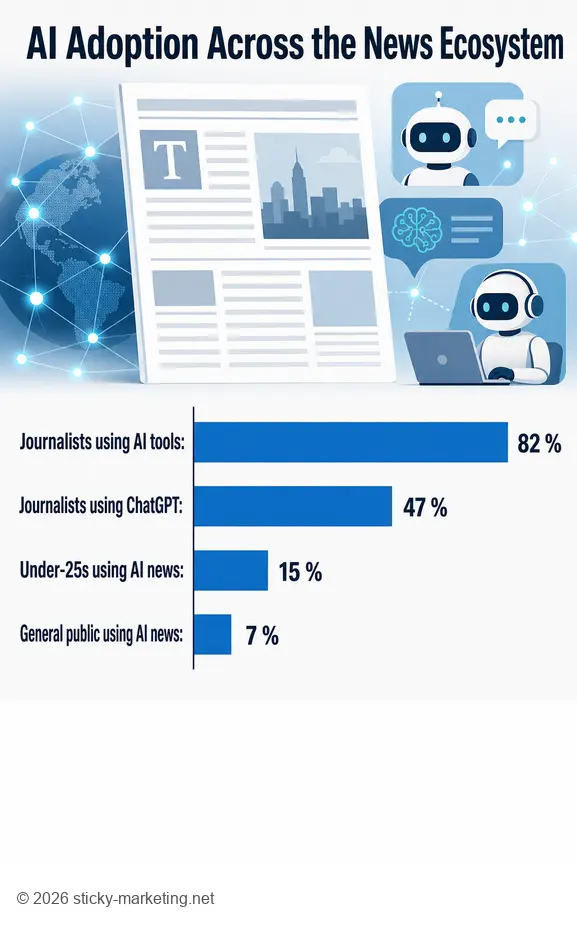
| Journalists using AI tools in 2026 | 82% |
| Journalists using ChatGPT in 2026 | 47% |
| People using AI chatbots as weekly news source (2025) | 7% (15% for under-25s) |
| B2B CEOs finding PR measurement unhelpful | 82% |
| Senior marketing decision-makers rating own measurement as “extremely accurate” | 66% |
What Is a Simple PR Plan and Why Is It Essential for Small Projects?
A simple PR plan serves as your roadmap for communication efforts, translating overall strategy into actionable steps. It defines the specific goals for a project, identifies the target audience, clarifies key messages, outlines the channels for distribution, and sets the metrics for evaluating success. Without this clear operational document, PR efforts often become reactive and unfocused, wasting precious time and budget that small businesses simply cannot afford. For bootstrapped entrepreneurs and small business owners, PR is about strategic communication that puts your message in front of the right people at the right time, building awareness and authority. This disciplined approach ensures every effort moves you closer to a measurable outcome, rather than just generating noise.
How does a PR plan differ from a PR strategy?
A PR strategy establishes the overarching direction by defining your brand’s role, relevant audiences, and desired reputation or business outcomes. Think of it as the “what” and “why”, the big picture. It frames your long-term communication goals and how PR contributes to them. In contrast, a PR plan converts this high-level strategy into concrete action. It details the “how” and “when.” This includes setting specific objectives, crafting messages tailored to different audiences, choosing media channels, assigning responsibilities, establishing timelines, and defining how success will be measured. The strategy provides the compass; the plan gives you the steps to walk the path.
What are the core benefits of a PR plan for small businesses?
The primary benefit of a PR plan for small businesses is enhanced visibility and credibility. Effective press release distribution, for example, can secure coverage in various media publications like newspapers, radio, TV, podcasts, or blogs, positioning a brand in front of a wider audience. This gets your story heard where it matters. Beyond direct exposure, a well-distributed press release can significantly improve search engine rankings, drive organic traffic, and increase online visibility. This is particularly true when content is crafted with appropriate keywords and includes backlinks. For small businesses operating with tight marketing budgets, PR offers a way to compete for attention without having to pay for every impression. It builds authority, which compounds over time.
What Are the Key Components of an Effective PR Plan?
An effective PR plan, even for small projects, requires several core components to ensure focus and measurable results. These elements, when defined clearly, prevent wasted effort and allow for precise tracking of progress. Concentrate on what genuinely moves the needle for your business.
Crafting a situation analysis and defining clear objectives
A situation analysis provides an overview of your current market position, including competitors, existing brand reputation, and any current communication challenges or opportunities. This is the starting point, the honest assessment of where you stand. Understand your baseline before you can aim for improvements. Following this, PR objectives should define the specific, measurable outcomes your team aims to achieve. These objectives must be directly tied to the challenges and opportunities identified in the situation analysis. Without clear, quantifiable objectives, you are optimizing for optics, not outcomes.
Identifying target audiences and key messages
Knowing who you want to reach is fundamental. Identifying your target audiences goes beyond demographics; it means understanding their needs, pain points, and preferred channels for information. If you try to speak to everyone, you will connect with no one. Once audiences are clear, key messages must be developed for each. These messages should be concise, compelling, and directly address what your audience needs to hear about your project. Focus on clear messaging.
Strategies for owned and earned media
An effective PR plan leverages both owned and earned media. Owned media refers to channels you control, such as your website, blog, social media profiles, and email newsletters. Your strategy here should detail how you will use these platforms to share your message directly and amplify any earned media. Earned media involves gaining coverage through third-party channels like news publications, industry blogs, or podcasts, typically through press releases or direct pitches. This is where credibility is built, as the message comes from an independent source. Your strategy should outline how you will target journalists and publications.
Allocating budget and choosing spokespeople
Even for small projects, include a detailed budget breakdown. This covers marketing, production, and distribution costs. The budget does not need to be large, but it must be allocated strategically. Understand what each dollar achieves. Choosing spokespeople is equally important. These are the individuals who will represent your project to the media and the public. They need to be knowledgeable, articulate, and capable of delivering your key messages consistently. Their credibility directly impacts the perception of your project.

How to Optimize Press Release Distribution for Small Projects
Press release distribution remains an effective way for small and medium-sized enterprises (SMEs) to build brand awareness and credibility. The key is to optimize the process to make every outreach count. This means being strategic about who you contact, how you present your information, and what channels you leverage.
Timing and targeting your pitches for maximum impact
Targeting the right people for press release distribution involves researching relevant industries and identifying the most relevant person at each publication. A generic “info@” email is a waste of time. Journalists prefer receiving press releases via email, so the pitch itself must be brief, direct to the purpose and story, and clearly explain why the story should be covered. Regarding timing, sending press releases mid-morning generally offers a better chance of standing out in a journalist’s inbox. Pitching midweek might also yield more coverage compared to Mondays and Fridays, when inboxes are either overflowing from the weekend or winding down. This increases your odds.
The importance of visuals and engaging content
Visuals are essential for media pick-up. Press releases that include images and video are significantly more likely to be covered by the media and gain pick-up. It makes a journalist’s job easier, providing ready-to-use assets. Beyond visuals, the content itself must be engaging and newsworthy. Journalists, 82% of whom use at least one AI tool in their workflow in 2026, including 47% using ChatGPT, look for actual stories. Focus on the impact, the problem solved, or the unique angle your project brings.
Leveraging your own channels and following up effectively
While traditional media coverage is valuable, do not neglect your owned channels. Share snippets, teasers, and the core message of your press release on your website, social media, and email list. However, avoid reposting the actual press release on your website, as this can affect its authenticity and page-score ranking. Instead, use a teaser paragraph and link to one of the media outlets that picked it up. Follow up effectively. A polite, concise follow-up email can remind a journalist about your story without being intrusive. Understand that journalists are busy; if they don’t cover it, move on to the next opportunity. Be persistent, but not harassing.
How to Measure PR Success in 2026?
Measuring PR success in 2026 requires a multi-layered approach that connects efforts to tangible business outcomes. The disconnect is clear: 82% of B2B CEOs state that the PR measurement they receive is not useful, yet 66% of senior marketing decision-makers rate their own measurement as “extremely accurate.” This gap suggests that many are still measuring the wrong things.
Understanding the 3 layers of modern PR measurement
Modern PR measurement in 2026 encompasses a 3-layer framework:
- Traditional Reach: This layer focuses on impressions, media mentions, and audience reach. It is the basic “how many people saw this” metric.
- Digital Authority: This layer assesses Domain Authority, backlinks generated from coverage, and engagement metrics on digital platforms. It connects PR directly to SEO benefits, similar to how one might assess ways to increase website authority.
- AI Visibility: This emerging layer measures how earned media influences AI-generated answers, such as those from AI assistants and chatbots. As the Reuters Institute Digital News Report 2025 found that 7% of people already use AI chatbots as a weekly news source (rising to 15% among under-25s), this is a critical, often overlooked channel where audiences increasingly find information.
Ignoring any of these layers means you are missing significant portions of your PR impact.
Free tools and key metrics for small project analytics
For small projects, you do not need expensive software to start measuring. Use Google Analytics to connect PR coverage to web outcomes by measuring website traffic, referral sources, and conversions. It helps you see if your PR efforts are driving visitors to your site and what those visitors do once they arrive. However, it is not a standalone PR reporting or monitoring tool. Key metrics to track include:
- Referral Traffic: How many visitors came from specific media outlets.
- Conversions: How many of those visitors took a desired action (e.g., filled a form, downloaded a guide).
- Brand Mentions: Use Google Alerts or similar free tools to track where your brand is mentioned.
- Backlinks: Monitor new backlinks from reputable sites as a result of your coverage.
Focus on metrics that directly correlate with your business objectives, not just vanity numbers.
Integrating AI visibility into your measurement framework
AI visibility measures how earned media influences AI-generated answers. This is an emerging channel where audiences increasingly find information, and it will only grow. To integrate this, you need to monitor if your key messages and company information are accurately represented in AI chatbot responses when relevant queries are made. While direct tools for this are still evolving, monitoring how AI chatbots summarize industry news or company information can provide insights. Ensure your content is clear, factual, and easily digestible, making it easier for AI models to index and cite accurately. The more authoritative and clear your earned media, the better your chances of AI citation.
Understanding common pitfalls in PR plan execution and measurement
One of the most common pitfalls is mistaking activity for achievement. Sending out numerous press releases without a clear target or engaging content will yield minimal results. Another is failing to align PR objectives with overall business goals. If your PR objectives do not contribute to lead generation, sales, or brand authority, they are merely busywork. In terms of measurement, relying solely on impressions or media mentions without looking at deeper digital and AI visibility metrics is a significant error. You must track the impact on website traffic, lead generation, and how your message is echoed in AI-generated summaries. If your agency cannot tell you how many leads it produced last month, that is the answer.
What to Avoid When Building Your PR Plan?
Building a PR plan for small projects means focusing on efficiency and tangible results. Avoiding common pitfalls can save significant time and resources, preventing efforts from becoming unfocused or leading to inaccurate expectations. It’s about being ruthless with what doesn’t serve a clear purpose.
Avoiding common pitfalls in template design
Many PR plan templates promise a quick solution, but they often lead to generic output. One significant pitfall is creating a template that uses undefined target audiences. If your audience is “everyone,” your message will resonate with no one. Every component of your plan, from messages to media channels, must be audience-specific. Another mistake is incorporating rigid timelines into your template. While a timeline with milestones is crucial, an overly rigid one fails to accommodate unforeseen changes or emerging opportunities. PR is often about reacting to the news cycle or sudden shifts in the market. Your plan needs to be agile enough to adapt without becoming entirely unmoored.
Preventing unfocused efforts and rigid timelines
Unfocused marketing efforts typically stem from a lack of clarity in objectives and target audiences. If you do not know precisely what you are trying to achieve or who you are trying to reach, your efforts will be scattered and ineffective. This is where a brutally honest situation analysis helps: it forces you to define your core problem before you start throwing solutions at it. Rigid timelines, on the other hand, can cause you to miss opportunities or burn out your team trying to meet arbitrary deadlines. While structure is necessary, PR plans for small projects should build in some flexibility. Understand that sometimes the best pitch happens outside your planned window. Focus on consistent, quality effort rather than strictly adhering to a calendar that does not reflect real-world dynamics.

Sources
Pages consulted for this article:
- presspage.com
- fleximize.com
- blog.onepitch.co
- prcoverage.ai
- notion.com