

Updated on August 6, 2026
Domain Authority (DA) is a search engine ranking score developed by Moz that predicts a website’s likelihood of ranking in search engine result pages (SERPs) on a logarithmic scale from 1 to 100. Boosting DA in 2026 requires a focused effort on backlink quality, comprehensive content, and robust site architecture, as organic search and AI answers increasingly rely on strong website authority.
Key figures:
| Metric | Value |
|---|---|
| Typical monthly organic visitors for genuine authority backlinks | 1,000+ |
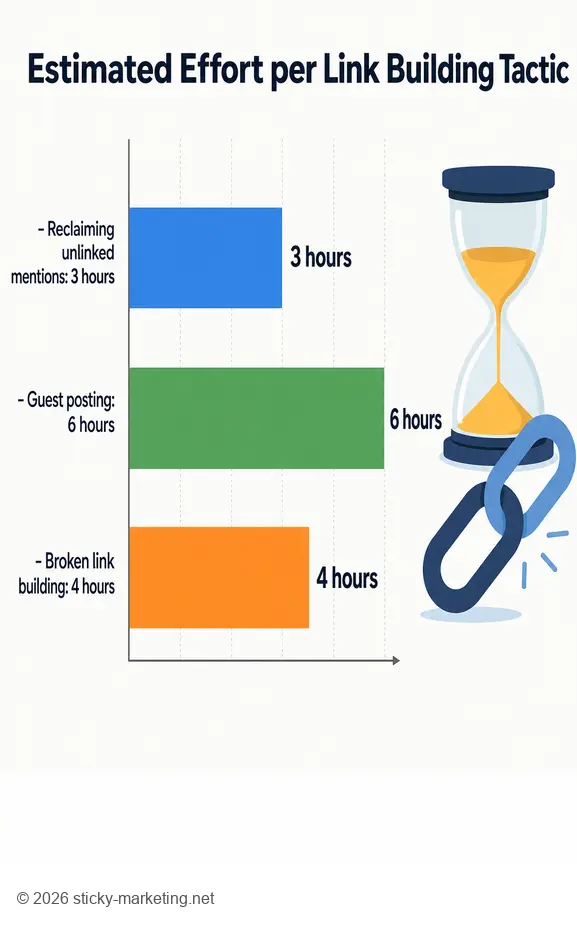
| Effort for reclaiming unlinked mentions (initial link-building) | 1-3 links in 2-3 hours |
| Effort for guest posting (per accepted post) | 4-6 hours |
| Effort for broken link building (finding 10 broken pages with 20+ referring domains) | 3-4 hours |
What is Domain Authority (DA) and Why Does it Matter in 2026?
Domain Authority (DA) serves as a comparative metric to gauge a website’s overall strength and its potential to rank in search results. While it’s a third-party score from Moz, not a direct Google ranking factor, it aggregates many observable signals that Google uses.
In 2026, strong website authority remains essential for appearing prominently in traditional search results and for being cited in AI-generated answers. It demands work on content, link profile, site structure, and overall web visibility. Ignoring it can lead to missed opportunities and hinder online visibility.
What is its definition and how is it calculated?
Domain Authority (DA) is a proprietary search engine ranking score developed by Moz, designed to predict how likely a website is to rank in search engine results. This score ranges from 1 to 100 on a logarithmic scale, meaning it’s significantly harder to increase your score from DA 70 to 80 than it is to move from DA 20 to 30. It’s not a metric Google uses directly, but it’s a useful approximation of a site’s overall strength based on observable signals, primarily link-related data.
DA is calculated using data from Moz’s Link Explorer web index and incorporates dozens of factors. The quality and quantity of backlinks pointing to a website heavily influence this score. Websites with a diverse and high-quality backlink portfolio tend to achieve higher DA scores, while those with fewer or lower-quality links generally score lower. It functions as an indicator of a website’s trustworthiness, based on its backlink profile.
Is Domain Authority still relevant for SEO in 2026?
Yes, Domain Authority remains highly relevant for SEO in 2026, even though Google does not use it directly. It functions as a third-party comparative metric that approximates how search engines might evaluate a site’s overall strength, primarily through its link-related data. For any small business owner, it’s a useful benchmark to track progress and understand competitive standing.
In the current search landscape, which includes increasingly sophisticated AI systems, website authority is evaluated on multiple fronts. AI systems specifically prioritize content that is easy to extract and quote, along with consistent brand information across various sources and clear structured data. Semrush’s Authority Score, for instance, uses link power, organic traffic, and spam factors to offer a similar benchmark, confirming that these signals affect ranking potential.
Topical Authority vs. Domain Authority: What to Prioritize in 2026?
The conversation around SEO in 2026 often pits topical authority against traditional domain authority building, particularly concerning which strategy yields faster and more sustainable ranking improvements. While established platforms like Moz emphasize backlink acquisition as the primary method to boost Domain Authority, a contemporary perspective suggests building comprehensive topical authority first might lead to quicker and more sustainable ranking gains before a heavy investment in link acquisition for DA.
This isn’t an either/or scenario if you’re serious about results. Moz maintains that the best way to increase Domain Authority is to improve a site’s overall SEO health, with a particular focus on the quality and quantity of external links pointing to it. This approach highlights the foundational role of backlinks in establishing authority. However, other views suggest that building at least 25-30 high-quality, interlinked articles within a single content cluster, establishing topical authority, can provide a significant boost before heavily investing in link acquisition.
For most businesses, particularly those operating on tighter budgets, this means a balanced approach is smart. Focus on becoming the undeniable expert on a specific set of topics first. Produce in-depth content that answers user questions and demonstrates expertise. Once that foundation is solid, the link-building efforts to raise Domain Authority will be far more effective, as you’ll have content worthy of being linked to. Trying to build links to mediocre content is a waste of time and money.

What Are the Key Factors Influencing Domain Authority?
Domain Authority is a complex score influenced by numerous factors, with the most significant weight placed on the quality and quantity of a website’s backlink profile. Beyond links, the overall health and structure of your site, including its content quality and user experience, affect how search engines perceive its authority.
A website’s DA is dynamic; it can fluctuate over time, increasing or decreasing based on changes to its link profile and other influencing factors. This means that maintaining and improving your site’s authority is an ongoing process, not a one-time fix. Anyone selling a “set it and forget it” solution is selling snake oil.
How do backlinks and referring domains impact DA?
Backlinks and referring domains are fundamental to Domain Authority. A backlink is a link from one website to another, and referring domains are the unique domains that link to your site. Websites with a diverse and high-quality backlink portfolio tend to achieve higher DA scores. Google’s E-E-A-T guidelines (Experience, Expertise, Authoritativeness, Trustworthiness) reward links from genuinely trusted sources, meaning not all links are created equal.
Authority backlinks are those originating from websites that Google already trusts, such as editorial publications, research institutions, and industry leaders. These are distinguished by factors like site age, consistent organic traffic (typically 1,000+ monthly visitors for genuine authority), strong editorial standards, and clear relevance to your niche. Editorial links from high-traffic, niche-relevant sites, especially when placed within the main article content rather than footers or sidebars, have the most impact because Google treats them as genuine recommendations.
What is the role of content quality and site structure?
Content quality and site structure are fundamental to building authority, even if their direct impact on a third-party metric like DA isn’t as immediate as backlinks. High-quality content attracts and retains visitors, which signals relevance and value to search engines. It also serves as the foundation for attracting those valuable editorial backlinks. Without truly useful content, your link-building efforts will hit a wall.
A strong site structure ensures that search engines can easily crawl and index your content, understand its hierarchy, and recognize your topical expertise. This includes logical navigation, well-organized categories, and a robust internal linking strategy. Good user experience (UX) and technical SEO, such as fast loading speeds and mobile-friendliness, also contribute to a site’s perceived authority by ensuring visitors have a positive experience, which encourages longer visits and lower bounce rates.
How Can You Effectively Increase Your Website’s Domain Authority?
Effectively increasing your website’s Domain Authority requires a multi-faceted approach, with a strong emphasis on building a robust, high-quality backlink profile. The goal is to earn trust. The process is a long-term effort without shortcuts that could backfire.
The best overall approach to increasing Domain Authority is to improve a site’s overall SEO health. This means not just chasing links, but ensuring your site is technically sound, user-friendly, and packed with valuable content. Relying solely on superficial tactics without addressing core SEO issues will not yield sustainable results.
What strategies attract high-quality backlinks?
Attracting high-quality backlinks means earning mentions from relevant sites. One effective strategy is creating linkable assets: highly-researched content, original data, case studies, comprehensive guides, visual content, or free tools. These are resources that other sites naturally want to reference because they add value to their own content.
- Guest posting: This involves writing useful articles for relevant niche sites and including a natural, contextual link back to your page. Focus on topics where your product or expertise naturally fits within their content. This typically requires 4-6 hours per accepted post, from finding sites to writing and submitting.
- Broken link building: Identify broken links on authority sites in your industry using a tool, then offer your high-quality content as a replacement to the webmasters linking to those dead pages. This can take approximately 3-4 hours of total effort to find 10 broken pages with 20+ referring domains.
- Reclaiming unlinked mentions: Find websites that are already talking about your brand, product, or service but haven’t linked to you. Reach out and politely ask them to convert the mention into a link. This is an easy initial link-building win, often yielding 1-3 links within 2-3 hours of effort.
How can you improve DA without buying links?
Improving Domain Authority without buying links is entirely possible and, frankly, the only sustainable way to do it. The practices that naturally attract links are also the ones that Google rewards with higher rankings. Relying on purchased links is a risky strategy that can harm a site’s long-term authority and search engine performance.
Focus on creating truly valuable content that naturally attracts links. This means producing unique insights, in-depth research, and helpful resources that other websites will genuinely want to cite. Beyond content, optimize your on-page SEO, enhance user experience (UX) by ensuring fast loading times and mobile-friendliness, and develop a strong internal linking strategy to distribute authority across your site.
What are other crucial SEO practices for DA growth?
Beyond direct link building, several other crucial SEO practices contribute significantly to DA growth and overall website authority. These are often overlooked in the race for external links but form the foundation of a healthy, authoritative website.
- On-page SEO optimization: Ensure your content is well-optimized for relevant keywords, includes proper heading structures, and offers a good user experience. This helps search engines understand what your page is about.
- Technical SEO audit: Regularly check for issues like crawl errors, broken redirects, and poor Core Web Vitals. A technically sound website is more easily crawled and indexed, signaling professionalism.
- User experience (UX) enhancements: Improve site speed, mobile responsiveness, and overall navigability. Sites that offer a smooth, intuitive experience tend to have lower bounce rates and higher engagement, which are positive signals to search engines.
- Internal linking strategy: Thoughtfully link related pages within your own site. This helps distribute link equity, improve navigation, and reinforce topical relevance.
- Content quality and freshness: Regularly update and expand existing content to ensure it remains accurate and comprehensive. This signals to search engines that your site is a living, evolving resource. Achieving authority requires more than just frequent, superficial updates, emphasizing the need for comprehensive and high-quality content.

How Long Does It Take to See Domain Authority Improvements?
Domain Authority is a dynamic score that does not change overnight. New websites typically start with a DA of 1 and see gradual increases as they earn authoritative backlinks over time. This process requires patience and consistent effort, as Google’s algorithms take time to re-evaluate and adjust. Significant movement can take months to appear.
The logarithmic nature of the DA scale means that improving your score becomes exponentially harder as it climbs. Less effort is required to move from DA 20 to 30 than from 70 to 80. Don’t chase a vanity metric; chase actual leads and traffic. The DA will follow if you do the work right.
What are realistic timelines for DA growth?
Realistic timelines for DA growth vary significantly depending on a site’s starting point, the competitiveness of its niche, and the consistency of its SEO efforts. For new sites, the initial jump from DA 1 to 10-20 can be relatively quick with focused link-building and quality content. However, moving into the higher tiers (DA 30+) requires sustained, strategic effort over many months or even years.
There are no “quick wins” for substantial DA increases without resorting to black-hat tactics that will eventually harm your site. For example, achieving mid to high 80s for a similar metric like Domain Rating (DR) typically requires accumulating around 23,000, 25,000 referring domains, according to a data analysis from 2013-2022 on cloud software providers. This demonstrates the sheer volume of authoritative links needed for top-tier authority, a far cry from a few guest posts.
What quantitative insights are available for DA progress?
Quantitative insights for DA progress mainly revolve around monitoring your backlink profile and referring domains over time. Tools like Moz’s Link Explorer or Semrush’s Backlink Analytics can track how many new referring domains you acquire, their individual domain authority, and the overall quality of your link profile. Look for consistent growth in relevant, high-authority links, not just a raw number increase.
While DA is a third-party metric, its movement is often a lagging indicator of your underlying SEO health. Focusing on actionable metrics like organic traffic growth, keyword rankings for specific terms, and lead generation from organic search will give you a clearer picture of your SEO success. An agency’s performance is best measured by actionable metrics like organic traffic growth and lead generation, rather than solely by third-party scores.
FAQ
Why doesn’t Google use Domain Authority as a direct ranking factor?
Google does not use Domain Authority (DA) as a direct ranking factor because DA is a third-party metric developed by Moz, based on its own proprietary data and algorithms. Google maintains its own complex set of hundreds of ranking signals, which it does not publicly disclose in detail. While DA is a useful approximation of a site’s overall strength, it’s not part of Google’s internal evaluation.
Is it possible for my Domain Authority to decrease?
Yes, your Domain Authority (DA) is a dynamic score that can fluctuate and decrease over time. A decrease might happen if your website loses a significant number of high-quality backlinks, acquires a large number of low-quality or spammy links, or if Moz’s algorithm updates. Competitors improving their link profiles can also make your comparative score appear lower.
What is a good Domain Authority score for a small business?
A “good” Domain Authority score for a small business is relative to its industry and competitors. Many new small businesses start with a DA of 1. A score between 20-40 is often considered respectable and achievable for many small businesses in less competitive niches, while anything above 50 indicates a strong, established online presence. The goal should be to consistently outpace your direct competitors, not to hit an arbitrary number.